GUIDE LIBRARY
Diagnose outbound by mechanism.
Filter by the layer you are operating. Every article is scoped to one question and links back to primary technical sources.
volume5 min
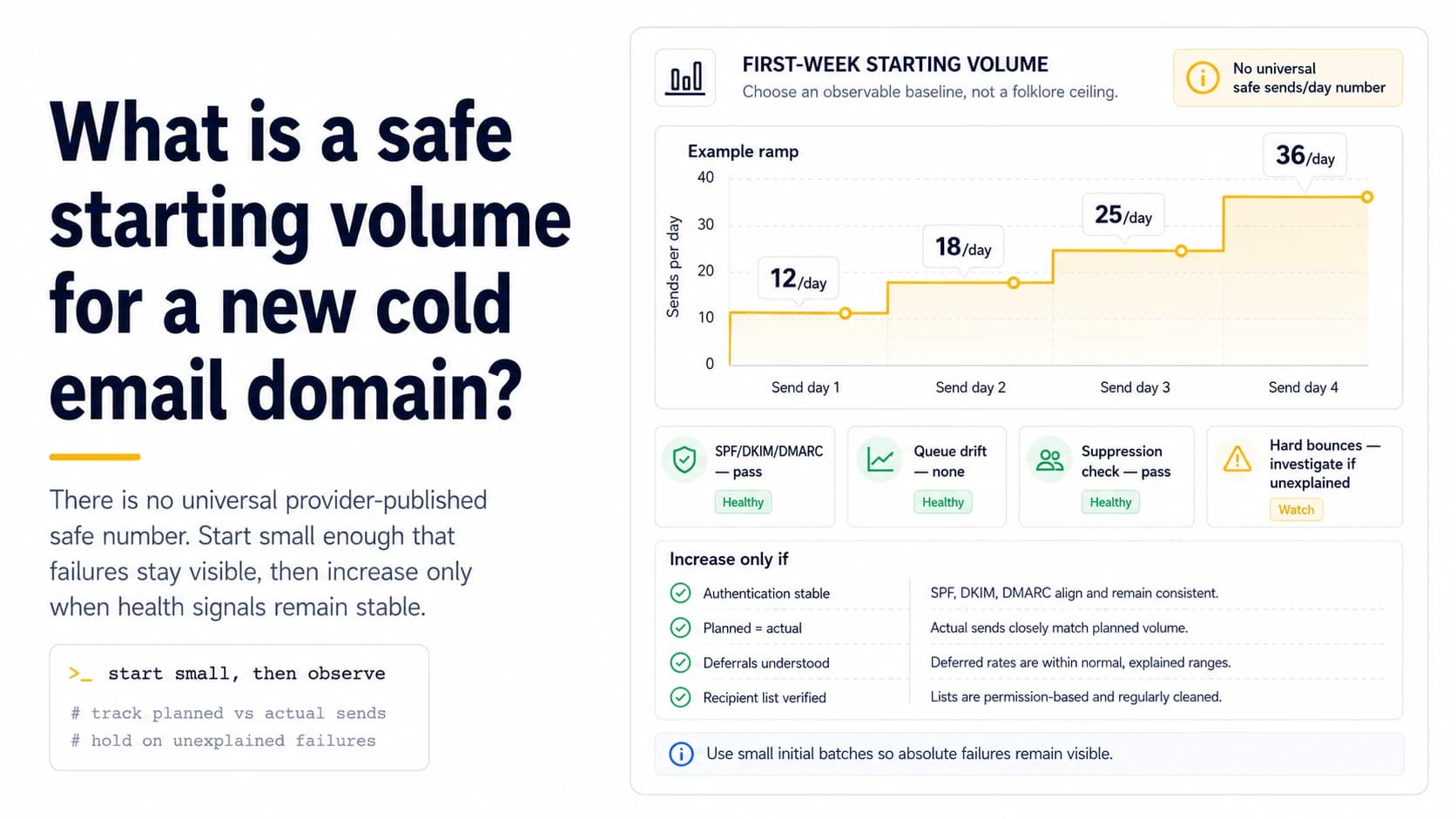
There is no provider-published universal safe number for cold outbound; start small enough that a few failures are visible and increase only after health signals stay stable.
Read field note →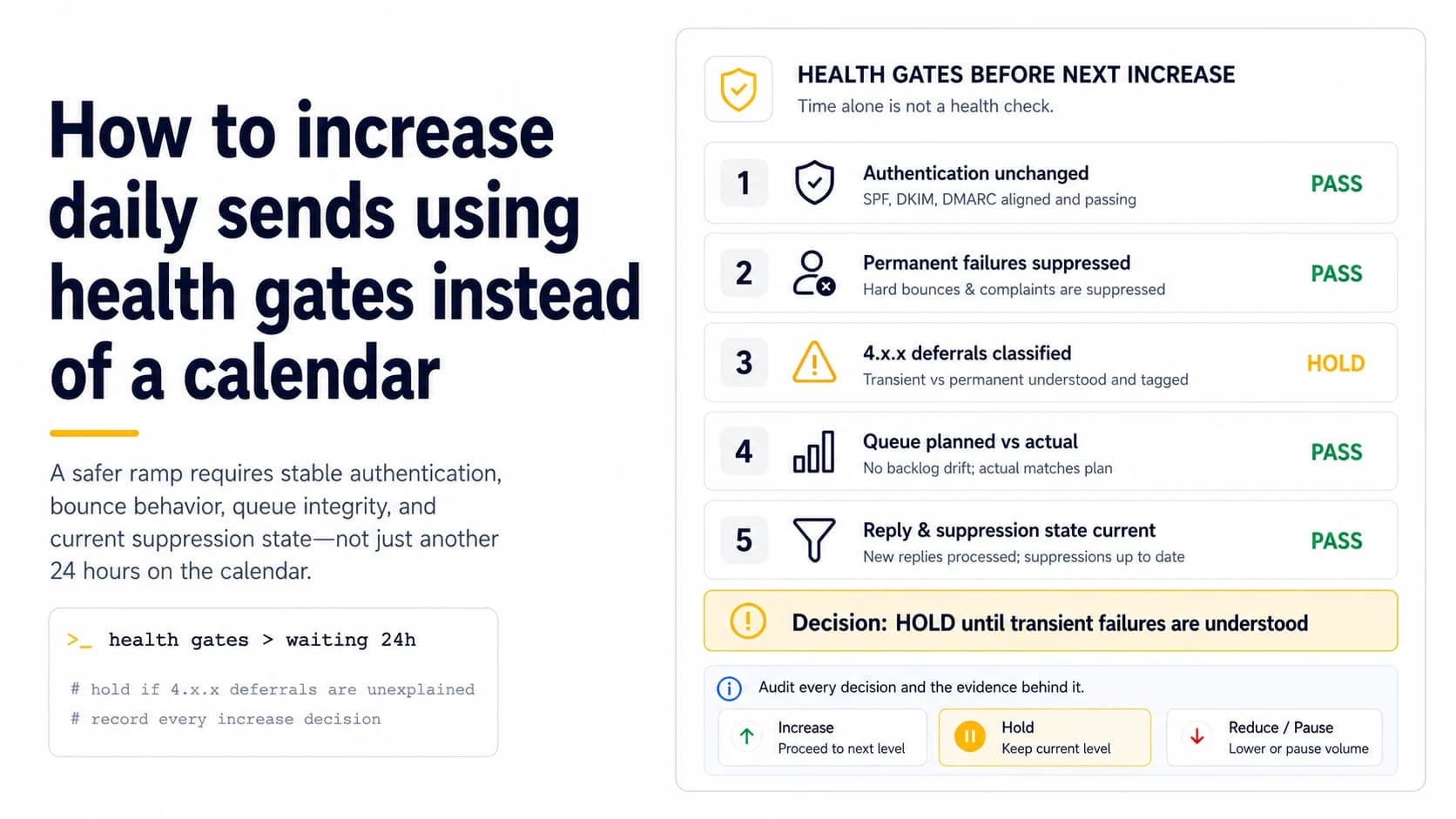
volume5 min
A ramp becomes safer when each increase requires stable authentication, bounce behavior and response state rather than simply waiting 24 hours.
Read field note →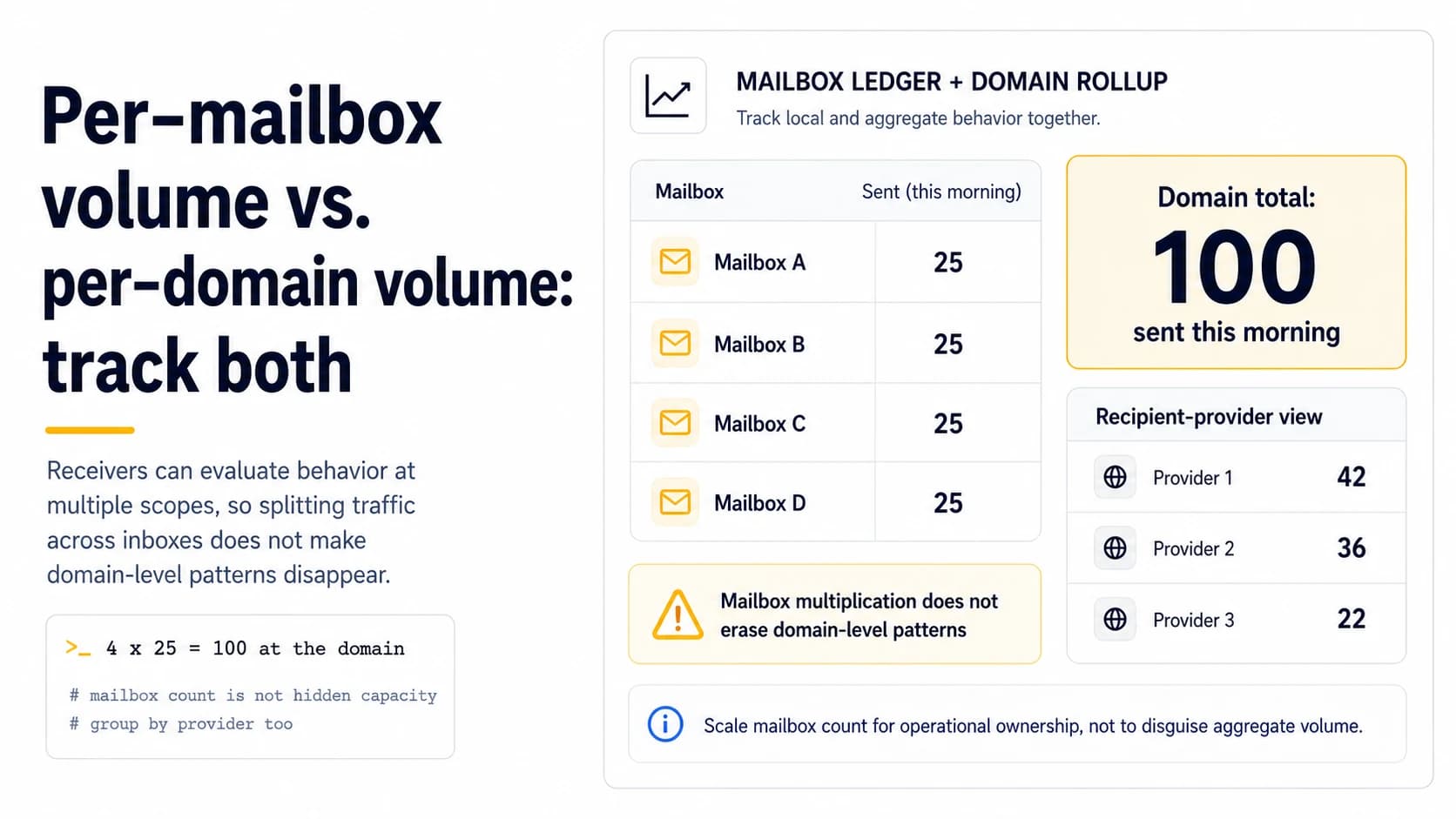
volume5 min
Receivers and providers can evaluate behavior at multiple scopes, so distributing traffic across mailboxes does not make domain-level patterns disappear.
Read field note →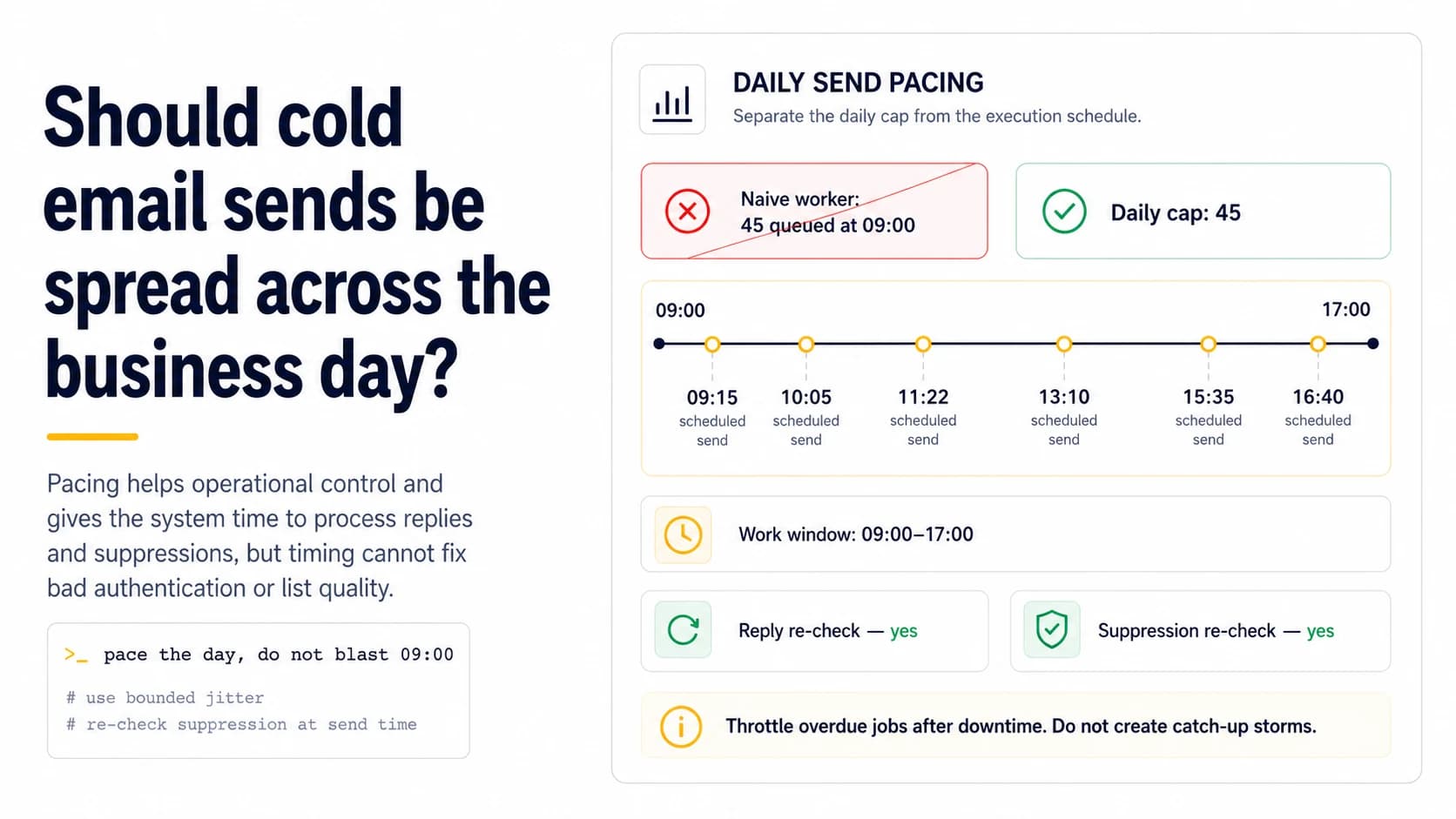
volume5 min
Spacing sends avoids machine-like bursts and gives the system time to process replies and suppressions before later touches, but timing cannot compensate for bad authentication or lists.
Read field note →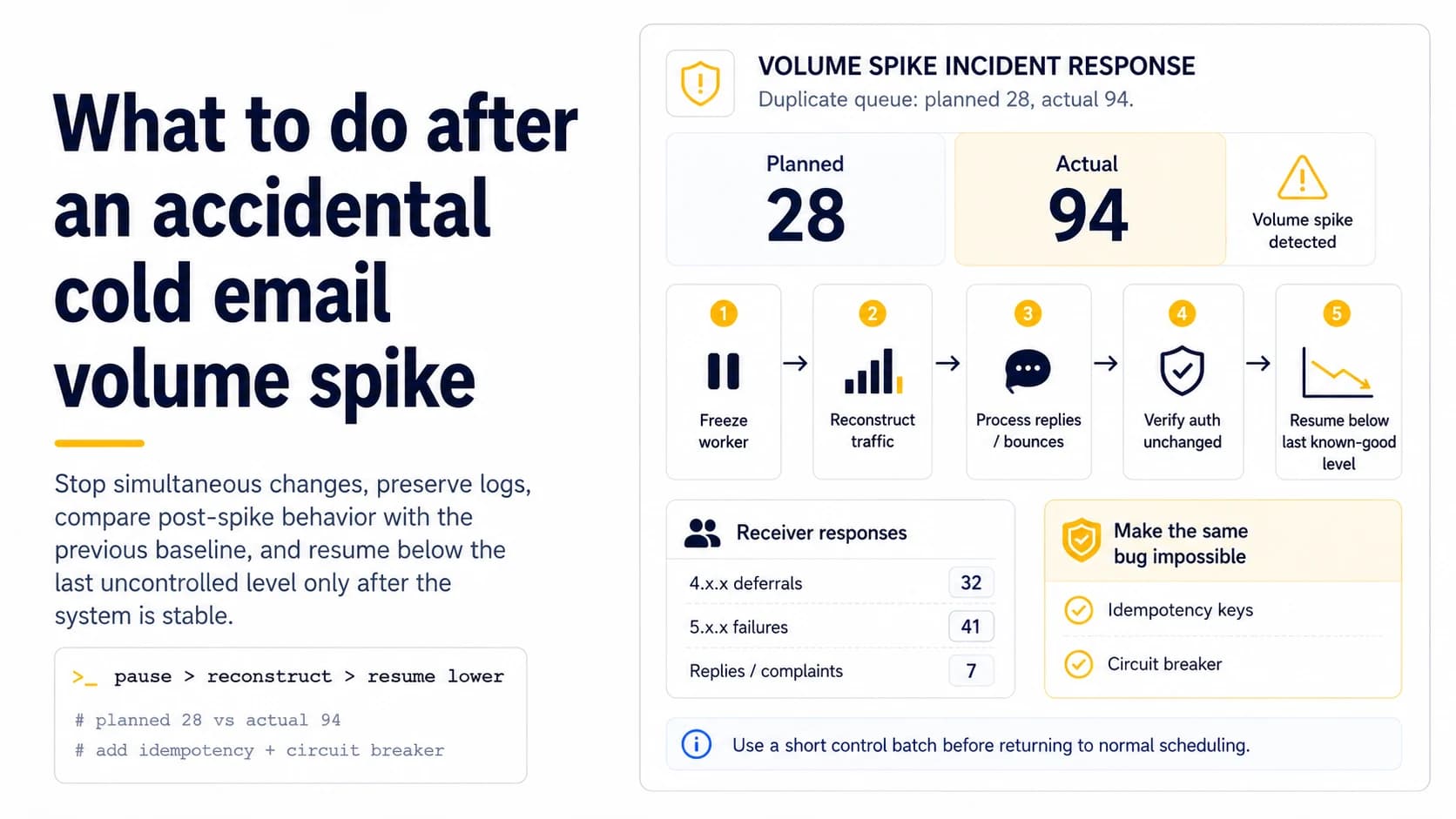
volume5 min
Stop making simultaneous changes, preserve logs, and compare post-spike authentication, bounce and reply behavior with the previous baseline.
Read field note →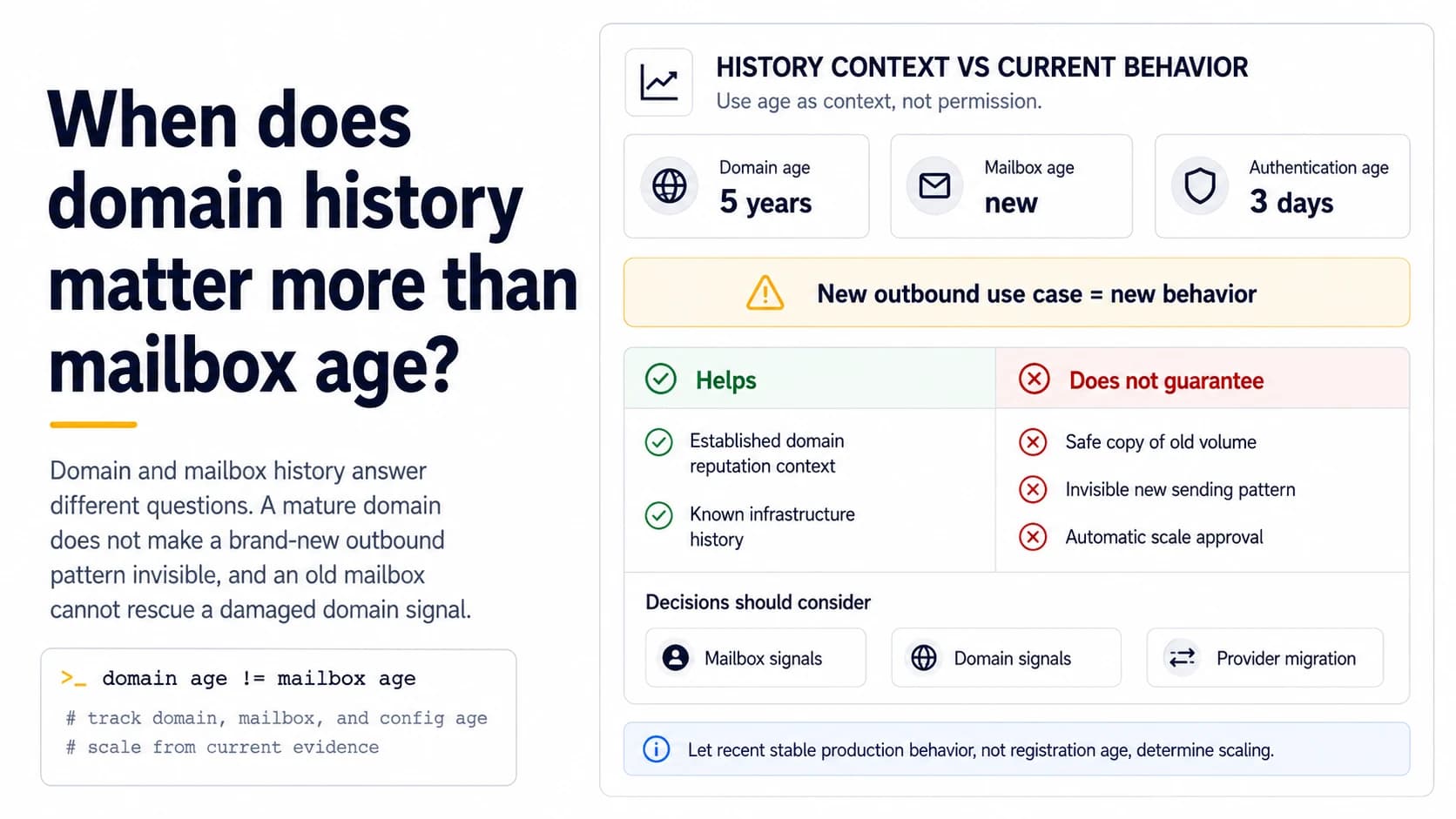
volume5 min
Domain and mailbox history answer different questions; a long-lived domain cannot make a brand-new sending pattern invisible, and an old mailbox cannot rescue a damaged domain signal.
Read field note →volume5 min
A second mailbox is a new sending identity even when the domain has history. If each mailbox inherits the old cap independently, total domain traffic can jump overnight.
Read field note →volume5 min
A weekend pause changes recent traffic shape. Backlogged queues and “catch up” logic can compress several days of intended sends into Monday morning, creating bursts that were never part of the normal pattern.
Read field note →