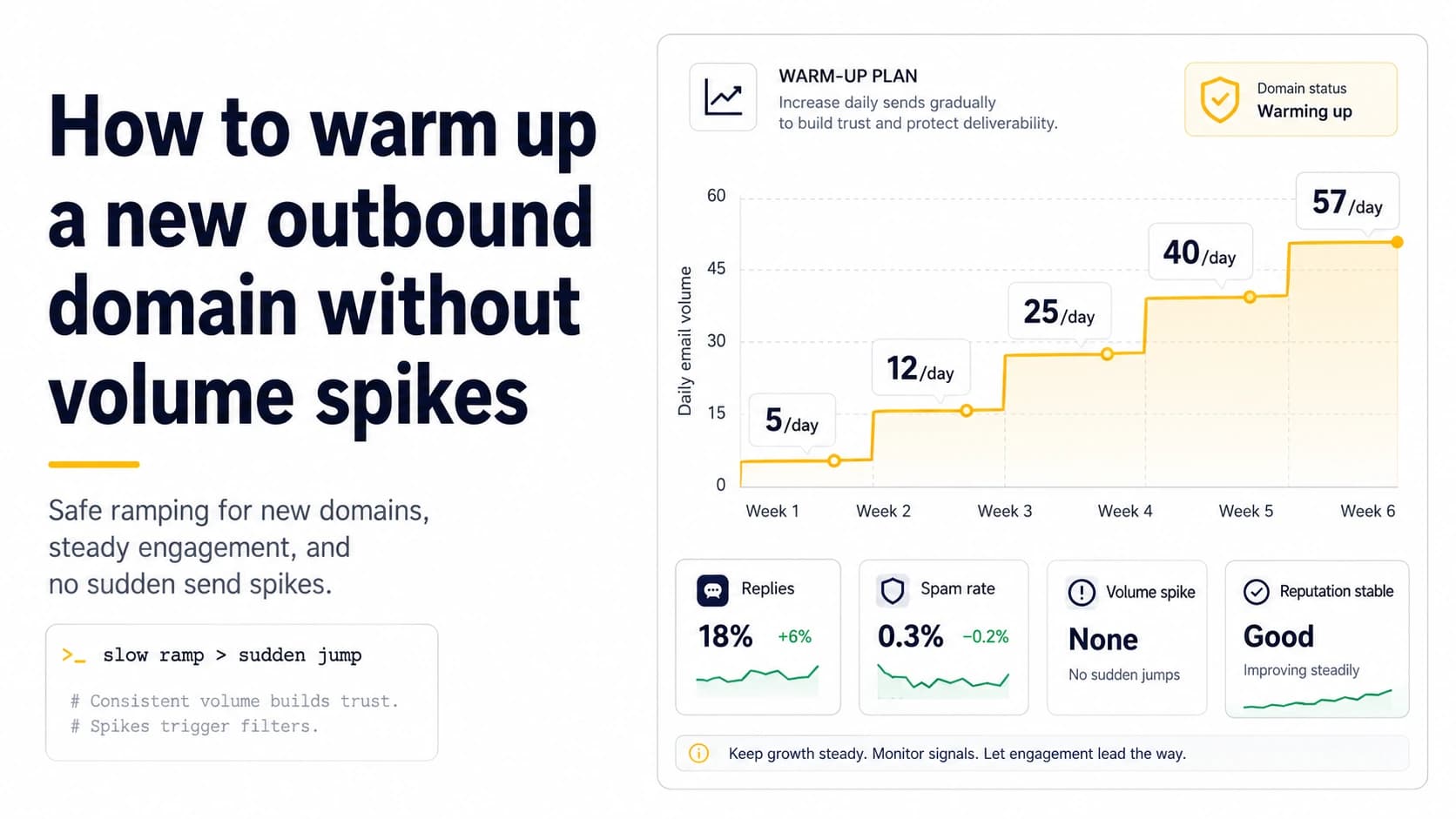
How to warm up a new outbound domain without volume spikes
A gradual ramp is less about obeying a magic schedule and more about avoiding abrupt changes while authentication, bounces and real replies stay healthy.
Read field note →Warmup is a way to build a recent, gradual sending pattern while authentication, bounces and real replies stay observable. These field notes cover mailbox warmup versus domain warmup, when to hold a ramp, how to move onto real prospect traffic without a cliff, and why a warmed mailbox can still land in spam.
New to this? Start with the pillar guide: Email warmup for cold senders, explained by mechanism
A gradual ramp is less about obeying a magic schedule and more about avoiding abrupt changes while authentication, bounces and real replies stay healthy.
Read field note →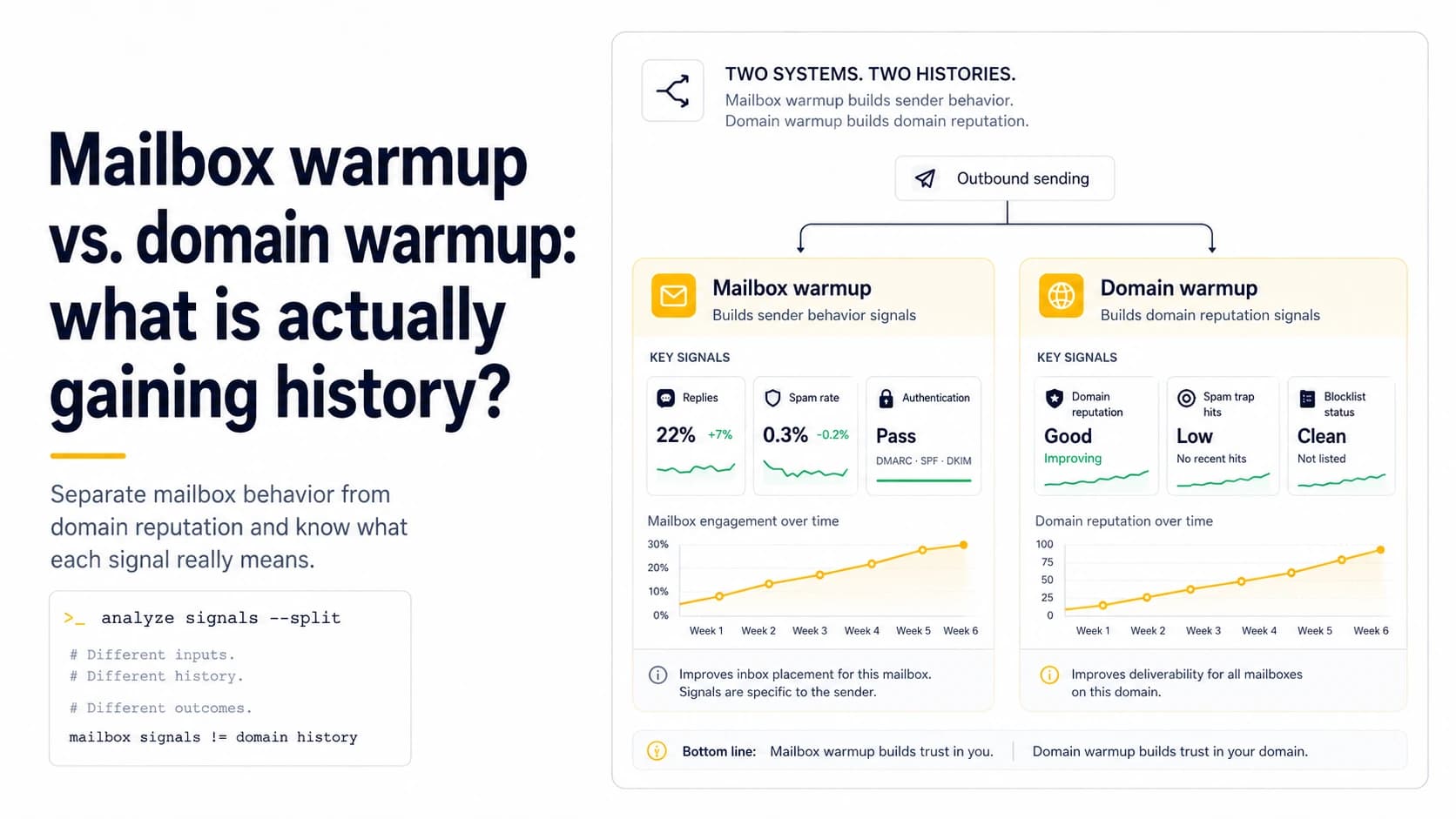
A mailbox and its parent domain share signals but are not interchangeable; adding a fresh mailbox to an established domain does not give it an identical behavioral history.
Read field note →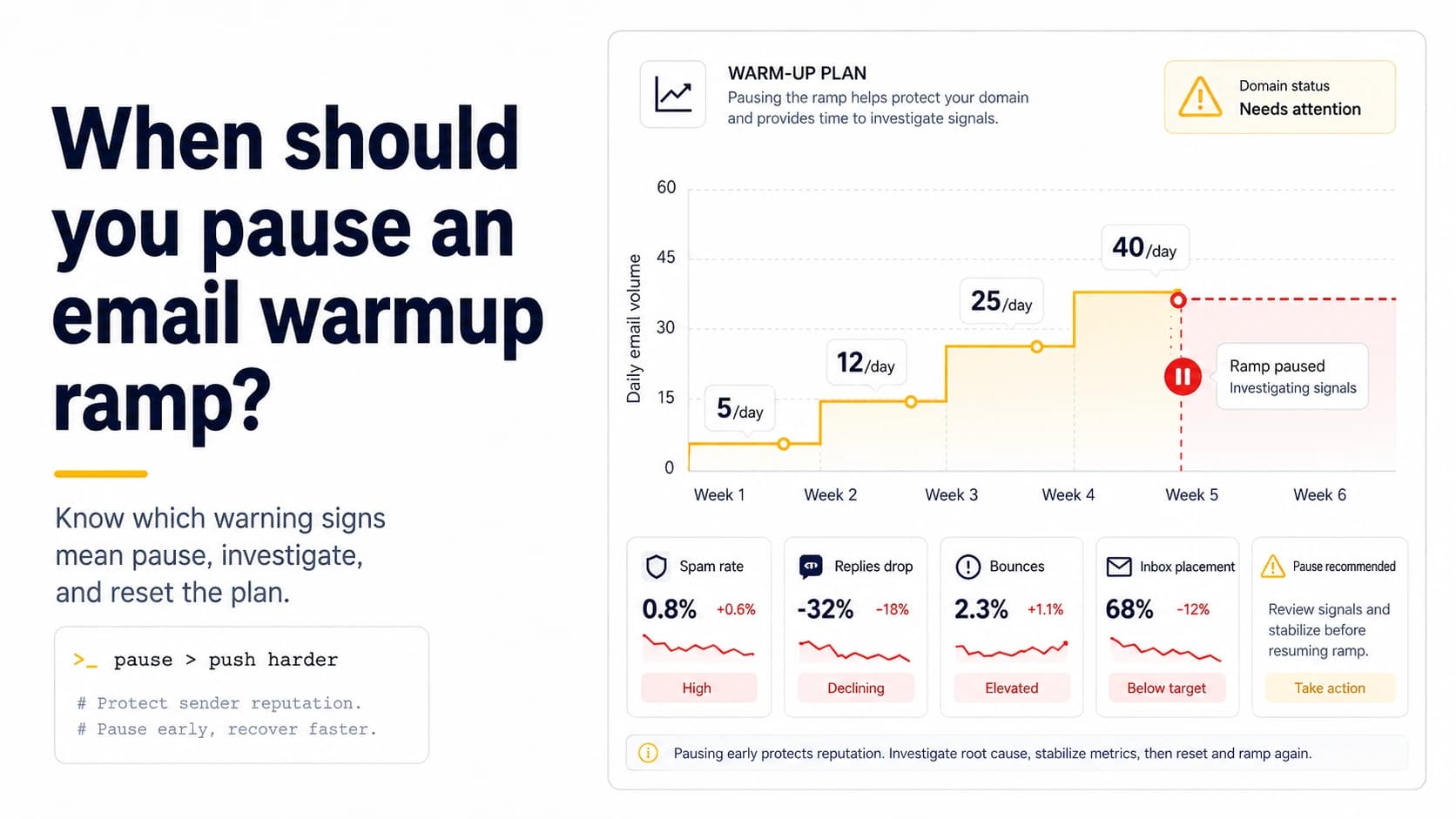
Pause when a negative signal changes materially, not merely because a fixed number of days has passed.
Read field note →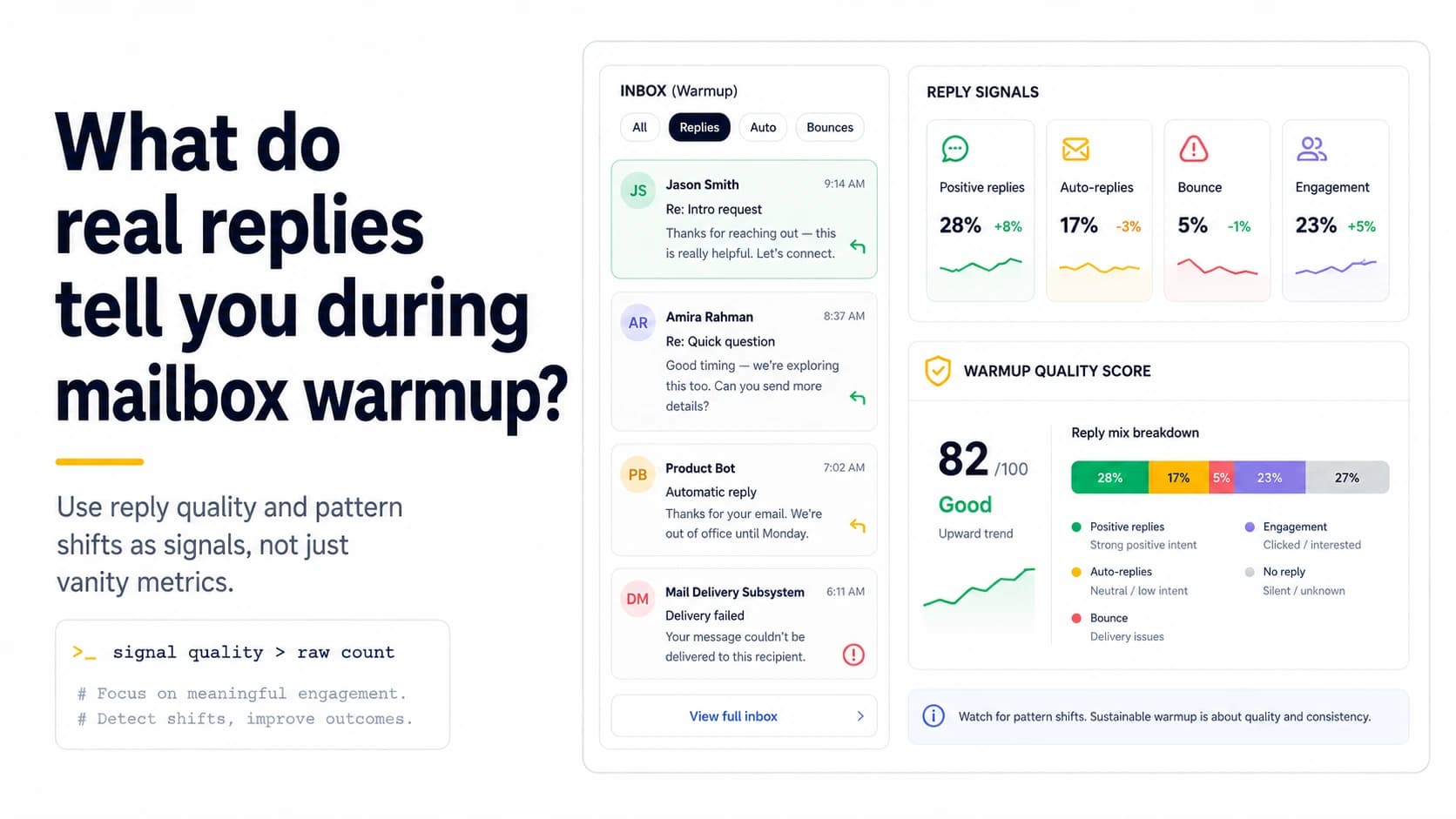
Replies are useful evidence of normal two-way use, but they are not a substitute for authentication, low bounce rates or recipient relevance.
Read field note →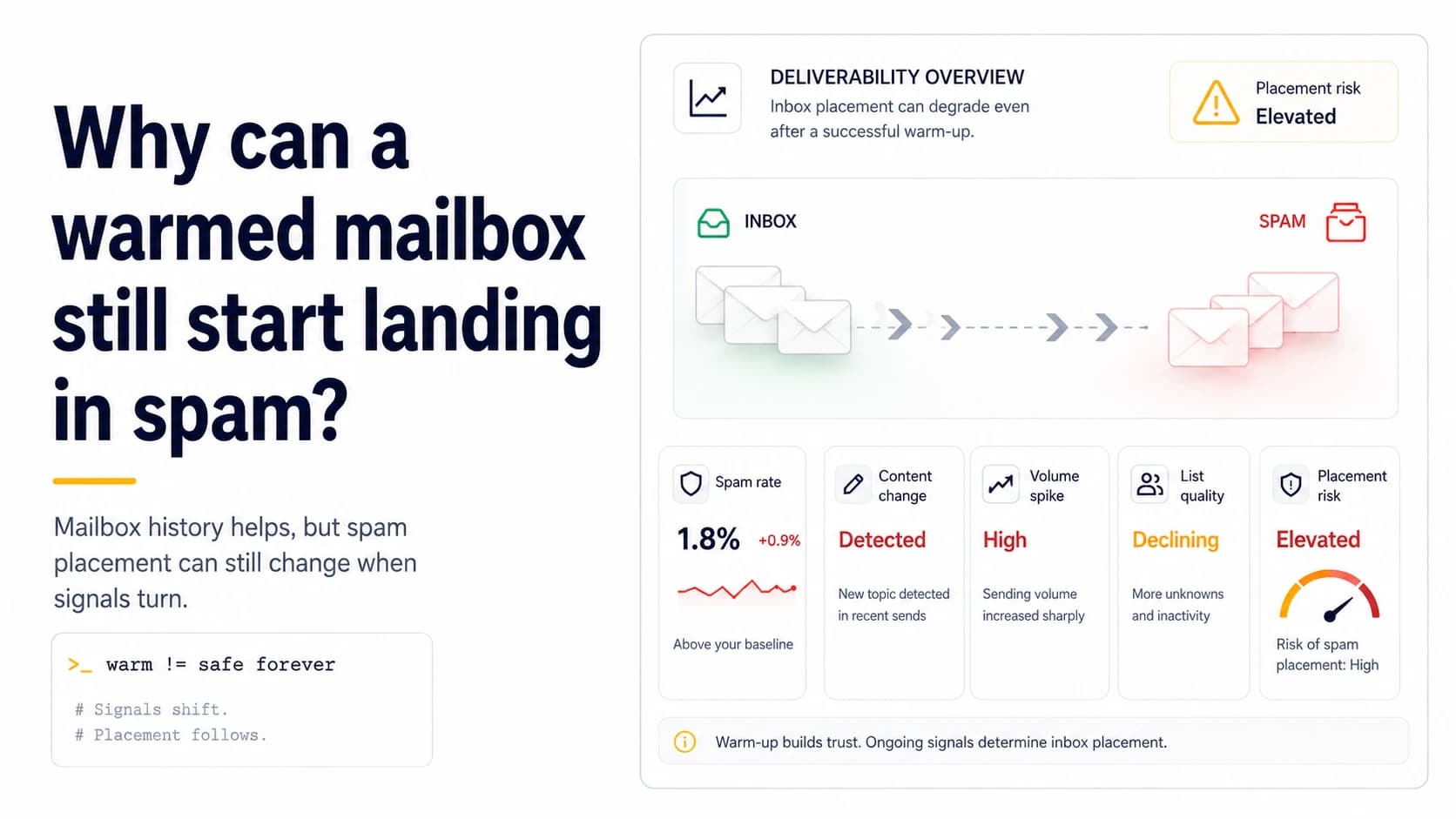
Warmup history cannot protect a sender from new authentication errors, stale lists, abrupt volume changes or complaint pressure.
Read field note →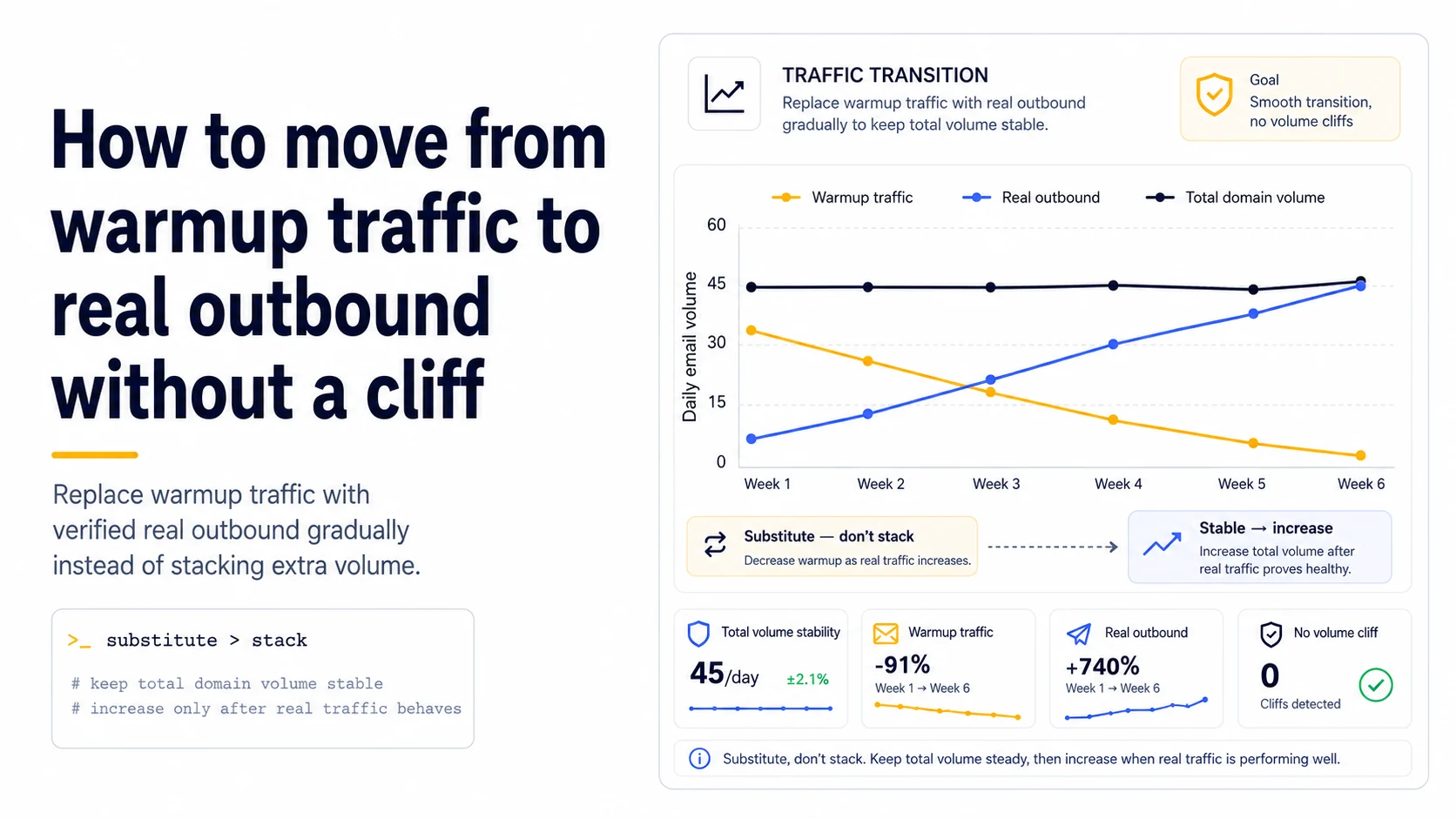
Transition by replacing synthetic or low-risk traffic with real, relevant conversations gradually instead of stacking a full prospect campaign on top.
Read field note →An established organizational domain does not make a newly used sending subdomain instantly proven. The subdomain may have new SPF, DKIM, Return-Path, and traffic history that receivers have not observed before.
Read field note →A mature domain can have healthy history while a newly created mailbox has no sending pattern of its own. Introduce the mailbox gradually and count its traffic inside the domain total.
Read field note →